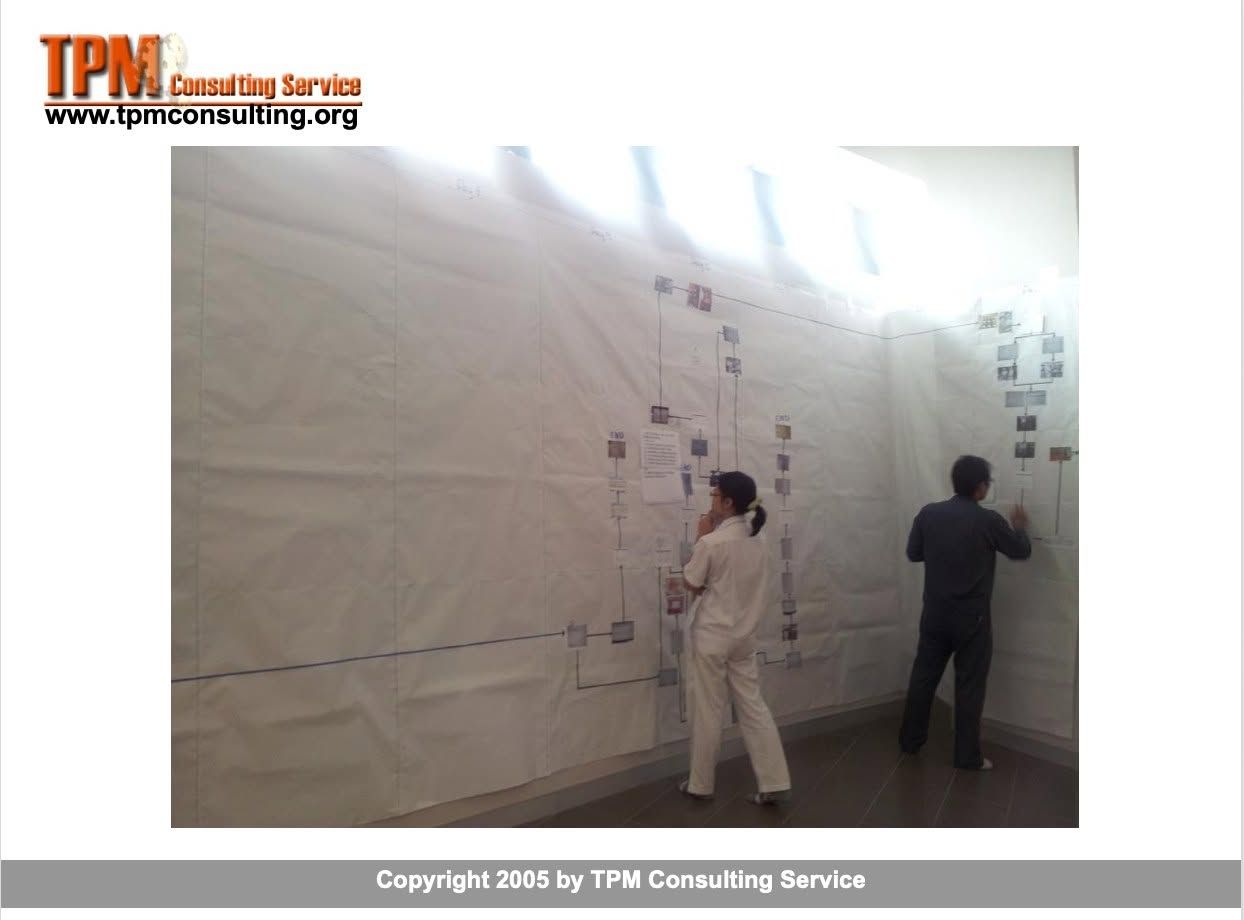
The trainer comes to your plant and uses your machines, your data and your line’s actual problems as the case study. Content is adjusted to the audience, from operators to senior management.
- Your own equipment and data as the material
- Content and length adjusted to the audience
- Can include a walk of the line
- Delivered in Thai or English
The most requested courses
TPM for Manager
Senior management has to understand TPM before it can set policy, the activity organisation, the committees and the master plan correctly. This course focuses on management’s role in leading and supporting TPM.
How to Implement TPM Step-by-Step: The Role and Responsibility of Committees and Eight Pillars
Most plants know TPM matters but are not clear on which committees are needed or what each of the eight pillars owns. This is a practical course aimed squarely at implementation, with worksheets and a follow-up after the training.
How to Work as a TPM Promoter (The Coordinator’s Workshop)
The person who drives TPM has to be trainer, administrator, coordinator and system-builder at once. This covers the whole skill set, and hands over the forms and teaching material to use afterwards.
TPM for Lean Factory
TPM aimed at management: making equipment support capacity rather than generate waste, seen through the lean categories — overproduction, WIP, idleness, transport, over-processing, inventory, motion and defects.
Intensive 4-Day TPM Training & Follow-up
For plants that intend to implement, not just learn. Conditions: every function attends (management, production, maintenance), the team leaves with an implementation plan, and the consultant returns to the plant to follow up and advise on what they have started.
What each course is for
TPM for Manager 1 day
Equipment is among the most important factors in producing goods of good quality, at low cost, delivered on time. But managing its effectiveness usually runs into obstacles in how the work is done and in the cooperation and coordination between departments — management, production and maintenance alike. Out of that came TPM, an idea that arose in Japan and carried a number of Japanese manufacturers to world class manufacturing. For an organisation that wants to use TPM to drive itself towards world-class production, it is of the first importance that senior management recognises TPM, gives it weight, and understands it — so that it acts and supports it correctly: setting the TPM policy, the organisation chart for the activity, the committee and working teams, and the master plan.
The course concentrates on the role and duties of senior management in setting TPM’s direction and taking part in its parts.
How to Implement TPM Step-by-Step: the role and responsibility of committees and the eight pillars 2 days
Everyone knows the idea of TPM and why it matters, and everyone knows that TPM needs a committee and eight pillars to carry the different parts of the work. But very often nobody knows what is actually in each pillar or what its steps are — only the name. The same goes for the committee: people know there has to be one, but are not sure what its role and duties really are. All of which shows up as lack of progress, confusion and disorder in doing TPM.
The course concentrates on understanding and on being able to put TPM into practice in a way that fits the organisation’s own nature and culture, with worksheets to work through and follow-up after the training.
How to Work as TPM Promoter (the TPM coordinator’s workshop) 2 days
TPM needs a trainer, someone to push it, someone to follow it up, someone to coordinate it, and training besides — all so as to build a system strong enough to sustain TPM. None of it happens without a person who knows TPM, and knows how to run TPM, well enough to do the job.
Two intensive days covering the knowledge and skill the job needs: the idea of TPM, how to steer it forward, how to measure it, and equally how to teach it — what to teach and to what depth. Throughout there are workshops, forms to take away, and a manual and teaching material you can use to teach at your own plant immediately.
TPM for the Lean Factory 2 days
TPM for the lean factory, or lean TPM, means TPM directed at maintaining — at managing — the equipment so that it supports the removal of waste as lean sees it: overproduction and work in process, idleness, transport, machining or method, inventory, motion, and defects.
The course connects maintenance work to lean’s seven wastes.
Intensive 4-Day TPM Training and Follow-up 4 days
TPM training whose knowledge actually gets used, and shows concretely inside the plant, has to meet these conditions: everyone must attend — management, production and maintenance · those attending must leave with a plan to act on · there must be follow-up after the training · and there must be someone to advise when putting it into practice runs into trouble.
The course combines training and workshops, follow-up on the action plan using real data, further training with presentations by those attending, and planning for what comes next with additional advice given inside the plant. A TPM senior consultant leads it and acts as the adviser in the plant, helping with problems that arise while it is being put into practice, and giving those attending the chance to present their results and exchange each group’s experience afterwards.
How a training day runs
| 09:00–10:30 | Concept and rationale, with examples from real plants |
| 10:45–12:00 | The core material, worked through on the plant’s own data |
| 13:00–14:30 | Group exercise on an actual problem from the line |
| 14:45–16:00 | Group presentations, wrap-up, and the plan for after the course |
Timings flex to your shift pattern — an afternoon course or two half-days both work.
What the plant provides
- A room for 15–30 people with a projector
- Whatever production and downtime data exists
- Floor access if the course includes a line walk
- The right audience actually in the room
Practical details
| Class size | 15–30 people; 20–25 works best |
| Language | Thai with English technical terms; English available |
| Material | Thai handbook written by the trainer himself |
| Certificate | Issued to every attendee |
| Follow-up | Implementation courses include a return visit |
Fees
No fixed rate is published. In-house and public courses are both quoted case by case, against the number of days, the number of attendees, the scope of the material, the venue and any follow-up visit. Tell us what you need and you will get a quote together with the dates that are workable.
In-house training, as it actually runs
From courses run at client plants. The room is theirs, and the case study is their own equipment and their own data.